Stitched in America: The New Wave of Domestic Garment Production Changing How We Think About Clothing
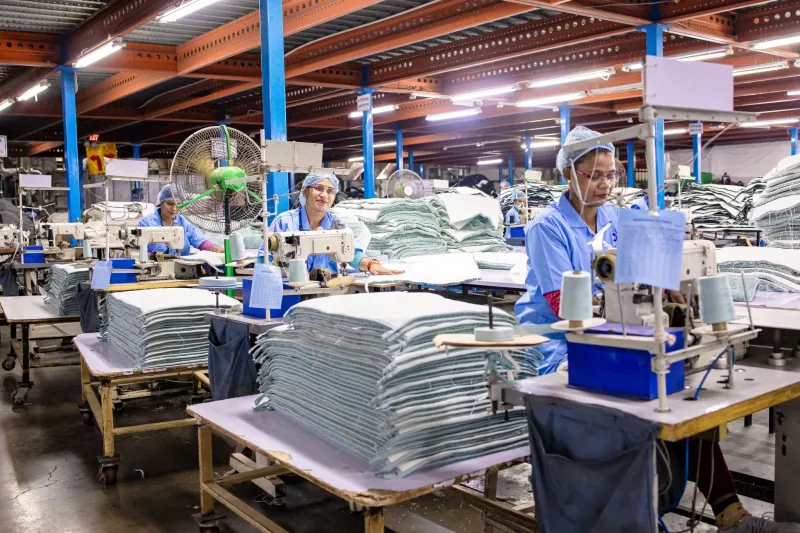
For decades, the phrase "Made in America" on a clothing label carried a specific and largely nostalgic weight. It evoked a manufacturing era that had passed—one associated with mid-century textile mills, union labor, and an apparel industry that once employed hundreds of thousands of Americans before production migrated offshore in search of lower costs.
Today, that phrase is being reclaimed, recontextualized, and, in the hands of a new generation of domestic producers, reinvented entirely.
Across the United States—from Los Angeles's fashion district to emerging production hubs in North Carolina, New York, and the Pacific Northwest—a cohort of garment manufacturers is building something that the industry had largely abandoned: an American apparel supply chain grounded in sustainability, ethical labor, and genuine transparency. The movement is still modest in scale relative to the global fast-fashion apparatus, but its influence on consumer expectations and industry norms is growing with notable momentum.
The Conditions That Created the Opportunity
To understand why domestic manufacturing is experiencing a renaissance, it helps to understand the conditions that made the previous model unsustainable—not merely environmentally, but economically and reputationally.
The offshoring of American garment production, which accelerated dramatically through the 1980s and 1990s, was driven by a straightforward cost logic: labor was cheaper abroad, regulatory environments were more permissive, and consumers, presented with lower retail prices, largely accepted the trade-off. For a time, the model worked on its own terms.
The cracks, however, were always there. Supply chains stretched across multiple continents introduced fragility that became dramatically apparent during the disruptions of 2020 and 2021, when port closures, shipping delays, and raw material shortages left American retailers unable to stock shelves reliably. Simultaneously, a series of high-profile labor and safety scandals in overseas production facilities drew sustained public attention to the human cost of cheap apparel. And a growing body of environmental research began quantifying the textile industry's contribution to water pollution, carbon emissions, and landfill overflow.
These converging pressures created an opening for a different kind of manufacturer—one prepared to argue, with evidence, that doing things differently was not merely ethical but commercially viable.
What the New Domestic Model Actually Looks Like
The emerging wave of American garment production does not simply replicate the offshore model with domestic labor. It is architecturally different in ways that matter.
Shorter, more transparent supply chains are a defining characteristic. When a manufacturer sources fabric from a domestic mill, cuts and sews in a facility they own or audit regularly, and ships directly to retailers or consumers, each step of the process is visible and accountable in a way that a twelve-country supply chain never can be. This transparency is not merely a marketing asset—it is a quality control mechanism that produces measurably more consistent garments.
Ethical labor practices are another distinguishing feature. Domestic production is subject to federal and state labor law, including minimum wage requirements, workplace safety standards, and workers' rights protections that have no reliable equivalent in many offshore production environments. Several of the most prominent new domestic manufacturers have gone further, pursuing living wage certifications and worker ownership structures that represent a meaningful departure from conventional industry practice.
Material sourcing with environmental intent rounds out the picture. A number of American producers are actively investing in relationships with domestic fiber growers and textile mills that prioritize organic cultivation, reduced water usage, and chemical management. The American Grown cotton program, regenerative wool sourcing from Western ranches, and domestically produced Tencel alternatives are all part of an emerging ecosystem of sustainable American textile production.
The Consumer Driving the Change
No manufacturing shift occurs without a market willing to support it, and the consumer landscape in the United States has changed in ways that make the new domestic model commercially credible.
Research conducted across multiple consumer surveys over the past several years consistently identifies a growing segment of American shoppers—concentrated but not limited to millennials and Gen Z—who report willingness to pay a premium for clothing that meets specific ethical and environmental criteria. Domestic production, fair labor practices, and material transparency rank consistently among the most valued attributes in this segment.
This is not an altruistic phenomenon alone. It is also a response to accumulated disappointment with the fast-fashion alternative. American consumers have had sufficient experience with inexpensive, rapidly degrading garments to recognize, at least in aggregate, that the low-price model carries its own costs—in replacement frequency, in the frustration of poor fit and material failure, and in an increasingly uncomfortable awareness of what those low prices represent in human and environmental terms.
The consumer who pays one hundred fifty dollars for a shirt made in Los Angeles under documented labor conditions, from certified organic cotton, is making a different kind of calculation than the consumer who paid twenty-five dollars for a comparable-looking shirt of opaque provenance. Neither calculation is irrational. But the premium customer is, in an important sense, purchasing certainty—certainty about quality, about ethics, about the relationship between price and actual cost.
Challenges the Movement Still Faces
Honesty requires acknowledging that domestic apparel manufacturing faces real structural challenges that enthusiasm alone will not resolve.
The cost differential between domestic and offshore production remains significant. Even with recent increases in overseas labor costs and the logistical expenses of extended supply chains, producing a garment in the United States costs more—sometimes substantially more—than producing a comparable garment in lower-wage markets. This reality limits the accessible price points at which domestic producers can operate, effectively excluding lower-income consumers from participation in the movement.
There is also the question of scale. The domestic manufacturing infrastructure that existed in 1970 has been largely dismantled. Rebuilding it—training skilled sewers, re-establishing domestic textile mills, developing the logistics networks that support domestic distribution—is a generational project, not a quarterly initiative.
These are not arguments against the movement. They are honest assessments of its current constraints and the work that remains.
A Redefined Standard
What the new wave of American garment production is ultimately building is a redefined standard for what domestic manufacturing can represent. Not a nostalgic recreation of a vanished industrial past, but a forward-looking model in which transparency, quality, sustainability, and ethical practice are treated as design requirements rather than marketing additions.
At Yuliwg Garment, the principles animating this movement—thoughtful construction, material integrity, and accountability at every stage of production—reflect our own understanding of what contemporary apparel should aspire to deliver. The garments that endure, in wardrobes and in cultural memory, are those made with genuine care for the people who wear them and the world in which they are worn.
The stitching happening across America right now is, in that sense, about considerably more than clothing.